Dermalux Tri-wave LED Light Therapy
“I am thrilled to introduce Dermalux Tri-wave to our portfolio of treatments at the clinic. This award winning technology has been tried, tested and proven to work on a range of skin concerns and I am excited to share the results with my patients.”
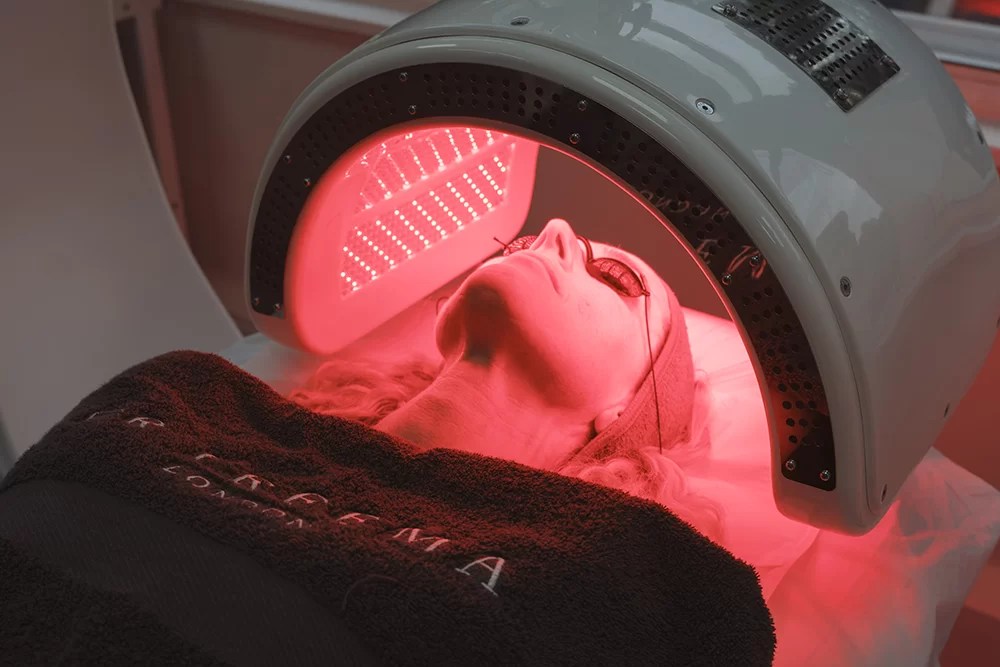
Dermalux Tri-wave is a non-invasive LED light therapy treatment that uses three wavelengths of light, blue, red and near-infrared, to help address acne, redness, sensitivity, fine lines and other signs of skin ageing.
Each wavelength works differently: blue light targets acne-causing bacteria, red light supports collagen-related processes, and near-infrared light helps calm inflammation and support skin repair.
At Dr Preema London Clinic, Dermalux is available as a standalone 30-minute treatment or alongside selected facial procedures. It is comfortable, requires no downtime and may be recommended as a course of treatments depending on your skin concerns.


What Is Dermalux Tri-wave LED Light Therapy?
Dermalux Tri-wave is a non-invasive LED light therapy treatment that uses specific wavelengths of light to support the skin’s natural repair processes, calm inflammation and improve certain skin concerns.
It works through a process called photobiomodulation, where skin cells absorb light energy, triggering biological responses without damaging or resurfacing the skin.
Dermalux combines three wavelengths, each with a different purpose.
These wavelengths can be used individually or together, depending on your skin concerns. Unlike lasers or IPL, Dermalux does not rely on controlled heat damage to produce its effects and does not use UV light.
Dermalux Tri-wave Blue Light
- Penetrates the upper layers of the skin.
- Targets light-sensitive compounds produced by acne-causing bacteria.
- Triggers a reaction that damages the bacteria and reduces their activity.
- Works without resurfacing or deliberately damaging the skin.
Dermalux Tri-wave Red Light
- Reaches the dermis, where collagen and elastin provide structural support.
- Influences fibroblasts, the cells responsible for producing collagen and elastin.
- Supports cellular activity involved in tissue maintenance and repair.
- Can influence inflammatory processes within the skin.
Dermalux Tri-wave Near Infrared Light
- Reaches deeper layers of the skin and underlying tissue.
- Interacts with cellular components involved in energy production and signalling.
- Influences inflammatory responses within the tissue.
- Supports cellular processes involved in tissue repair and recovery.
Dermalux LED Light Therapy Treatment Information
Explore Dermalux LED Light Therapy treatment details at our Mayfair, London clinic, including treatment time, comfort level, recommended sessions, results and maintenance. Each treatment is tailored to your individual skin concerns and goals.

Treatment Time
How long does a Dermalux Tri-Wave LED Light Therapy treatment take?
A Dermalux Tri-Wave LED Light Therapy session typically takes around 30 minutes.
Treatment is quick, non-invasive and requires no downtime, making it easy to fit into your day.

Comfort Level
What does Dermalux Tri-Wave LED Light Therapy feel like?
Dermalux is a painless, relaxing treatment that is generally very well tolerated.
You may experience gentle warmth during the session, with no needles, discomfort or recovery time required.

Course Frequency
How many Dermalux Tri-Wave LED Light Therapy treatments are needed?
A one-off post treatment or a course of 8–12 treatments, typically twice weekly, may be recommended.
The number of sessions will depend on your skin concerns, treatment goals and individual response.

Action to Take Effect
How soon will I see results from Dermalux Tri-Wave LED Light Therapy?
Skin may appear brighter and more refreshed after one session.
Improvements in redness, blemishes, skin tone and texture typically develop gradually over a course of treatments.

Duration of Effect
How long do Dermalux Tri-Wave LED Light Therapy results last?
Results can last for up to 3-6 months following a completed treatment course.
Longevity varies depending on your skin condition, lifestyle and treatment frequency, with regular sessions helping maintain improvements.

Maintenance
How often should you have Dermalux Tri-Wave LED Light Therapy maintenance?
Regular maintenance sessions, often every 2–4 weeks, may be recommended.
Your practitioner will advise on a personalised schedule to help maintain your skin’s clarity, radiance and overall health.
Dermalux LED Light Therapy Benefits
Dermalux offers a gentle, non-invasive way to address common skin concerns, helping to improve skin clarity, reduce irritation and support a smoother, healthier-looking complexion.
Blue Light
- Anti-bacterial
- Treats spots without causing irritation to the skin
- Improves skin clarity
- Provides a calming effect for acne-prone skin
Red Light
- Stimulates collagen and elastin production
- Reduces fine lines and wrinkles
- Increases skin hydration
- Improves uneven skin tone and texture
- Revitalises and restores radiant skin
Near Infrared Light
- Delivers advanced skin rejuvenation benefits
- Calms redness and irritation
- Reduces age spots and pigmentation
- Restores skin health
- Ideal for the most sensitive skins
Results vary depending on individual skin concerns and may develop gradually over multiple sessions.
Before & After Dermalux Tri-wave LED Light Therapy
Explore our Dermalux Tri-Wave LED Light Therapy before and after photos to see real patient results, highlighting visible improvements in skin clarity, redness, texture, and overall radiance. These images offer a realistic insight into the results that may be achieved with treatment.
Closed
Click to View Dermalux LED Results

What Skin Concerns Can Dermalux Treat?
Dermalux LED light therapy may help manage acne, redness, skin sensitivity and early signs of ageing. Different wavelengths target different biological processes, allowing treatment to be tailored to your skin concerns.
Dermalux for Acne and Spot-Prone Skin
Blue light targets acne-causing bacteria, while red light may help calm associated inflammation. Dermalux can help with:
- Mild to moderate inflammatory acne.
- Inflamed spots and breakouts.
- Redness associated with active blemishes.
Dermalux for Rosacea and Redness
Dermalux red and near-infrared light may help calm inflammation and soothe sensitive, redness-prone skin, including some rosacea-related symptoms. Potential benefits may include:
- Reducing facial redness associated with inflammation.
- Calming mild rosacea-related irritation and discomfort.
- Soothing sensitive or temporarily irritated skin.
Dermalux does not cure rosacea or remove visible thread veins.
Dermalux for Pigmentation and Uneven Skin Tone
Dermalux may help improve the appearance of uneven skin tone, particularly where inflammation contributes to discolouration. Potential benefits may include:
- Reducing lingering redness following acne breakouts.
- Supporting a more even-looking complexion as inflammation settles.
- Calming skin irritation associated with some forms of discolouration.
Evidence for reducing established pigmentation, including sun spots and melasma, is limited.
Why Choose Dr Preema London Clinic for Dermalux Tri-wave LED Light Therapy in Mayfair, London?
At Dr Preema London Clinic, Dermalux Tri-wave LED light therapy is delivered by our experienced Medical Aesthetics team as part of a personalised approach to skin care and treatment.
We assess your individual skin concerns to select the most appropriate combination of blue, red and near-infrared light, whether your aim is to manage acne, calm redness, address early signs of skin ageing or support skin recovery.
Dermalux Tri-wave is available as a stand-alone treatment or can be combined with any of our other facial procedures including our Dr Preema Facials, Medical Needling or Secret RF, to enhance results and soothe the skin post-treatment.


Dermalux LED FAQs
Can you have Dermalux when pregnant?
Dermalux LED Light Therapy is generally not recommended during pregnancy due to limited safety research. We advise postponing treatment until after pregnancy unless medically cleared.
Is Dermalux worth it?
Dermalux can be worthwhile for those looking to improve skin clarity, redness, texture, and signs of ageing without invasive procedures or downtime. Results vary and often require multiple sessions.
What is the downside of red light therapy?
Red light therapy is generally well tolerated, but results can be gradual and require regular treatments. Temporary redness, irritation, or eye discomfort may occur, particularly with incorrect use.
What does LED light therapy do for the face?
LED light therapy uses targeted wavelengths to support collagen production, calm inflammation, reduce acne-causing bacteria, and improve overall skin tone and texture.
Does LED light help your skin?
Yes. LED light therapy can help improve acne, redness, fine lines, and skin texture by supporting the skin’s natural repair and rejuvenation processes.
Is LED light therapy the same as red light therapy?
Red light therapy is a type of LED light therapy. While red light focuses on skin rejuvenation and collagen production, Dermalux Tri-Wave combines red, blue, and near-infrared wavelengths to target a wider range of skin concerns.
Can I do red light therapy after laser treatment?
Yes, red light therapy can often be used after laser treatment to help calm redness, reduce inflammation, and support skin recovery. However, suitability depends on the type of laser treatment, so always follow your practitioner’s aftercare advice.
As featured in:

Sub Heading

Sub Heading

Sub Heading

Sub Heading

Sub Heading

Sub Heading

Sub Heading

Sub Heading
Aesthetic Clinic in Mayfair, Central London
Dr Preema London Clinic is located at Avenfield House, 118–127 Park Lane, Mayfair, London W1K 7AF, in the heart of Central London.
Our Mayfair aesthetic clinic is conveniently located on Park Lane, just a short walk from Marble Arch Underground Station, Oxford Street and Hyde Park, and close to Grosvenor House Hotel, The Dorchester and the wider Mayfair shopping and hotel district.
Getting to Dr Preema London Clinic
By Underground: Marble Arch Underground Station on the Central line is approximately a one-minute walk from the clinic. Take Exit 2 and walk down Park Lane towards Mayfair.
By Train: Paddington Station is approximately 20 minutes away on foot, or a short journey by taxi.
By Car: The clinic is easily accessible from across Central London, with nearby parking available. Please note that Park Lane and Mayfair are within the London Congestion Charge Zone.
Clinic Opening Hours
Monday: 9am–5:30pm
Tuesday: 9am–8pm
Wednesday: 9am–8pm
Thursday: 9am–8pm
Friday: 9am–7pm
Saturday: Limited availability
Sunday: Closed
For appointments or further information, please call 020 7221 0043 or WhatsApp +44 7391 153225.
+447391153225 - WhatsApp only
Dr. Preema London Clinic
Avenfield House
118-127 Park Lane
Mayfair
London
W1K 7AF